Definir la enfermedad: El proyecto MOG
Cuando una persona encontró un nombre para su enfermedad rara, abrió la puerta para que miles de personas recibieran apoyo.

Por Gina DeMillo Wagner
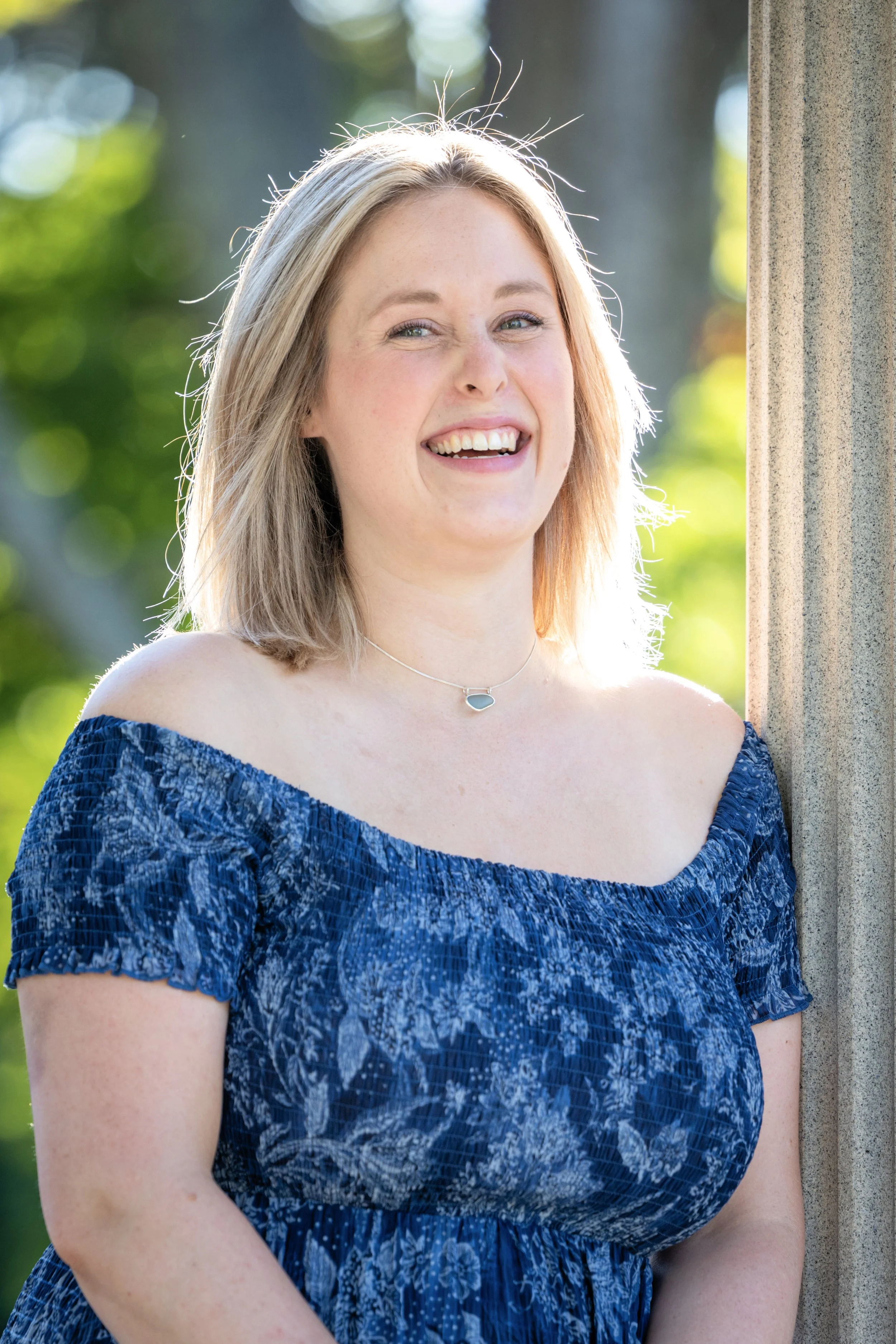
Muchas personas que padecen enfermedades raras describen su vida en términos de antes y después. Antes del diagnóstico, experimentan frustración, confusión y agotamiento cuando visitan a varios médicos e intentan encontrar sentido a sus síntomas. Después del diagnóstico, pueden experimentar oleadas de alivio mezcladas con la determinación de encontrar tratamientos y, a menudo, dolor por el impacto de la enfermedad en sus vidas. Nadie mejor que Julia Lefelar, Directora Ejecutiva y Cofundadora del Proyecto MOG, para entender lo que se siente al cruzar esa línea invisible que marca el antes y el después.
“My disease started subtly, but with a big impact,” Julia recalls. “I was brushed off for many years and told it was all in my head. I struggled even to get through the day. It was very traumatic.” It wasn’t until Julia experienced something measurable – blindness – that doctors took her seriously. “If someone had been an expert in this, they might have said ‘Hey, maybe we should look at neurology’ but I didn’t have that, wasn’t afforded that. Blindness was what sent me right to a neuro-ophthalmologist, who eventually got me to a neuroimmunologist.”
This was in 2014, before most experts had even heard of Myelin Oligodendrocyte Glycoprotein Antibody Disease (MOGAD). “There was little information with questionable accuracy for patients, doctors, or caregivers on the disease symptoms, diagnosis, prognosis, and treatment options,” Julia notes.
Una vez que Julia tuvo un diagnóstico oficial, inmediatamente se dedicó a ayudar a otras personas que pudieran estar viviendo con MOGAD y experimentando la misma desesperanza que ella había sentido.
Building a Community for those with MOG
Muchas organizaciones raras empiezan con familiares y otras personas solidarias. "Cuando empecé este viaje, no había nada para mí", dice Julia. "Esa fue la motivación para ponerme manos a la obra". Amy Ednie, Kristina, la hija de Julia, y otra paciente se lanzaron a ayudar. A través de sus redes, empezaron a involucrar a compañeros de trabajo, amigos, familiares y otros pacientes para poner en marcha la organización. El Proyecto MOG nació a finales de 2017 y se convirtió oficialmente en una organización sin ánimo de lucro 501(c)3 reconocida en enero de 2021.
Julia atribuye a Amy el éxito inicial de la organización. Al principio sólo pensábamos en recaudar fondos, vender pasteles y lavar coches, pero Amy nos dijo: " No, no, no, ¡pensemos en grande! Tenemos que hacer de esto una verdadera organización".
The project started out under the umbrella of the Siegel Rare Neuroimmune Association (SRNA) and then established as a separate organization as awareness for MOGAD grew. Today, The MOG Project has approximately 6,000 registered patients worldwide and is continuing to grow and raise awareness among patients, doctors, and researchers.
Defining MOGAD as a Disease
One of the priorities of The MOG Project was to establish MOGAD as a legitimate disease. “It felt like an emergency,” Julia recalls. People were dealing with debilitating symptoms without knowing why. “For the good of the patients, they needed answers, and they needed them quickly.”
“Getting a diagnosis is urgent, especially for people who wake up and are suddenly blind, which is what eventually happened to me,” Julia says. A quick response can help reverse vision loss and prevent autoimmune encephalitis, which can be fatal. The goal is to get people out of the “MOG limbo,” that uncertain time when they have symptoms but no definitive answers.
MOGAD was originally thought to be a variant of Neuromyelitis Optica and its Spectrum Disorders (NMOSD). However, experts realized there was a group of patients who also get unique autoimmune symptoms for which the MOG antibody is the cause. “Those presentations are very different and they need to have different resources,” Julia argues.
That led to a new antibody test to identify MOGAD. “From there, we were able to put the focus on getting a new disease code.” The CDC uses something called the International Classification of Diseases (ICD) to name and describe different diseases. These codes validate the disease, which has implications for research, treatments, and health insurance coverage. In 2023, MOGAD was provided a code under the ICD-10. Soon, MOGAD will also be recognized by the World Health Organization. “It makes it easier for patients to find experts, find potential treatments, and opens up new pathways to research.”
Finding Treatments for MOGAD
Julia notes that the current research on treatments is looking hopeful. There are clinical studies currently underway that are building off of previous research for other neurological and autoimmune disorders, such as Multiple Sclerosis and Neuromyelitis Optica.
Como resultado, cada vez más pacientes pasan del frustrante "antes" al más esperanzador "después", donde pueden encontrar apoyo, defensa y un posible alivio de los ataques de MOGAD.
Resources for MOGAD Patients, Caregivers & Medical Professionals:
MOGAD Facts & Information, including MOGAD and ADEM Disease information, understanding the diagnostic criteria, and more: https://mogproject.org/resources/fact-and-information-sheets/
MOGmentum Disease Information, a 4-part learning series in graphic format for quick and easy understanding of the disease and its management: https://mogproject.org/resources/mogmentum/
Rocket Surveys, which aim at collecting data on patient experience and providing that to researchers: https://mogproject.org/rocket-surveys/
Our Blind Resources page provides helpful resources to allow caregivers of those who are newly blind to connect to invaluable services for regaining independence: https://mogproject.org/resources/for-the-blind/
Clinical trials for MOGAD: https://mogproject.org/clinical-trials/